
Stop Buying Courses: How to Decide if an Online Course Is Actually Worth It
If you’ve never bought a course that you regretted, I wanna meet you, because you are a rare gem.
Most people regret buying online courses all the freaking time because marketing creates urgency and promises fast results. But don’t stress, slowing down and asking a few simple questions before purchasing can help you decide whether a course actually fits your situation.
It’s definitely hard to remember in the moment though. You see a post, or an ad, or someone shares a sales page. You click through and start reading. Then somewhere in the middle you start thinking… wait a second. Maybe this is the thing I’ve been missing.
Maybe this person figured out something I didn’t. Maybe they have the shortcut.
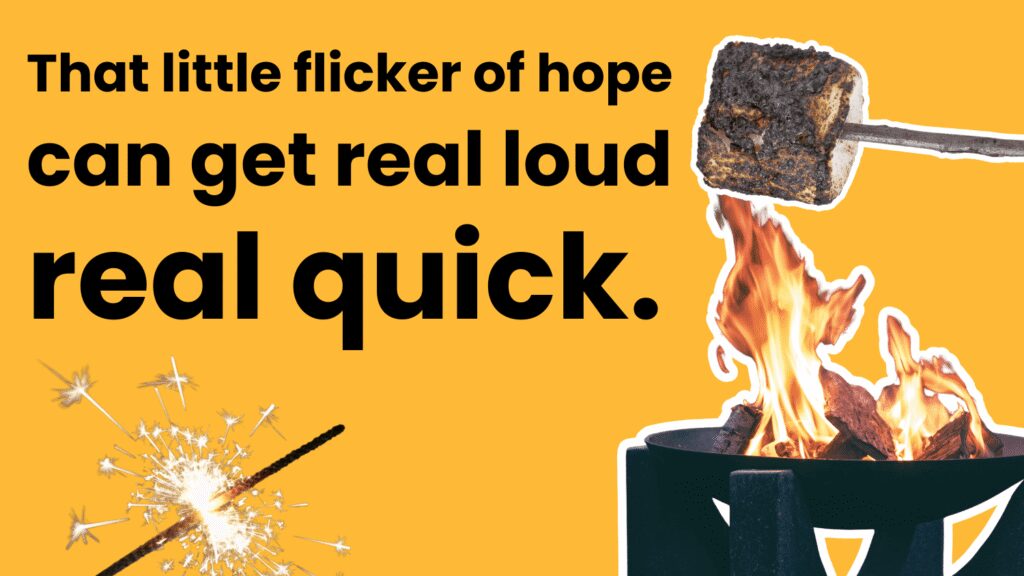
And if you’ve been working hard on your business, needing to make more money, or feeling confused or stuck, that little feeling of hope can get real loud real quick.
I’ve definitely caught myself halfway through a sales page already picturing the future version of my business where everything finally makes sense and I can finally just relax and have it all solved.
But when your brain starts imagining that, you go from asking yourself:
“Do I actually want or need this?”
to “How can I possibly grow my business without this?!?”
And those are two very different feelings and questions.
Why Smart Business Owners Still Buy Courses They Regret
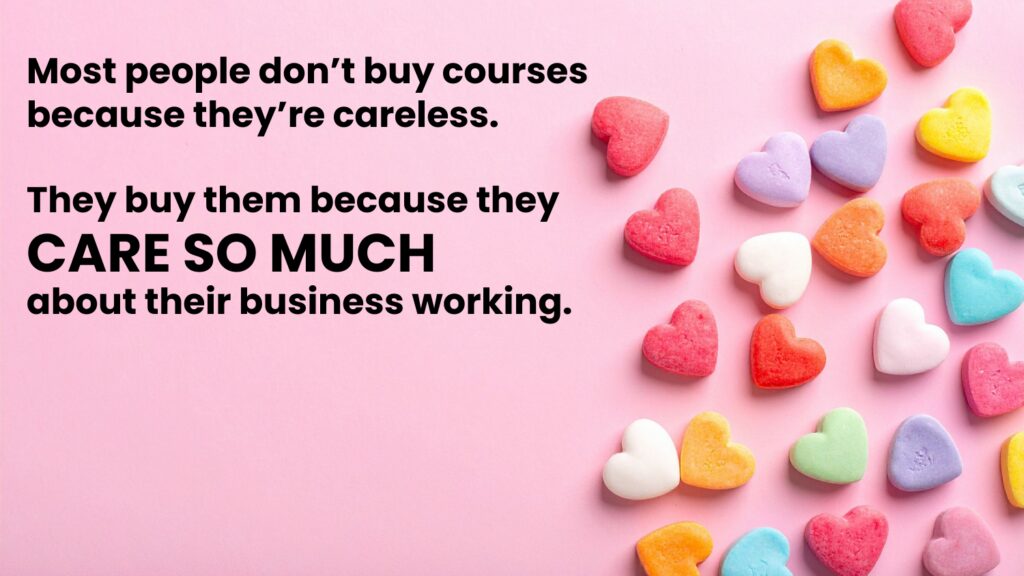
Most people don’t buy courses because they’re careless.
They buy them because they care SO MUCH about their business working.
You want to help people.
You want to build something meaningful.
You want the freedom and flexibility that running your own business promises.
When something feels uncertain or slow, it’s totally natural to look for guidance.
The tricky part is that online marketing is very good at speeding up decisions.
You’ll see things like:
- doors closing tonight
- price going up tomorrow
- bonuses disappearing at midnight
- only a few spots left
Suddenly the decision isn’t really about the offer anymore.
It’s about the clock.
And when that happens, it becomes much harder to hear your own thinking, especially if you are neurodivergent, highly sensitive, or close to burn out.
And really a lot of the pressure around buying courses to do things quickly comes from the idea that your business should always be growing bigger and faster. But sometimes the more useful question is simply: What does enough look like for your business?
I explored that idea more in an essay about anti-capitalist business goals, which started as a conversation I had with Bear Hebert on my podcast.
7 Questions to Ask Before Buying an Online Course
Over time I started noticing patterns in the moments right before people click “buy.”
These are some of the questions that help slow that moment down.
Is there a timer or deadline involved?
Deadlines are not automatically bad. Sometimes they’re real.
We all know that if a live workshop is on Friday, we have to sign up by Friday to attend. That’s legit.
But deadlines do something specific to your decision-making process. They make the decision more urgent. That’s where the FOMO can creep in, and you’re forced to make decisions much faster that you normally would.
Your thinking shifts from:
“Do I want or need this?” 🤔 (thoughtful and calm)
to
“I better do this quick or I’m gonna miss out!!!” 😱 (stressed and activated)
That small shift can fog your thinking and lead to regrets later.
How much does it cost?
Price changes the emotional stakes of a decision.
A $19 template and a $3,000 program can create the same excitement at first, but they carry very different levels of pressure once you start thinking about buying.
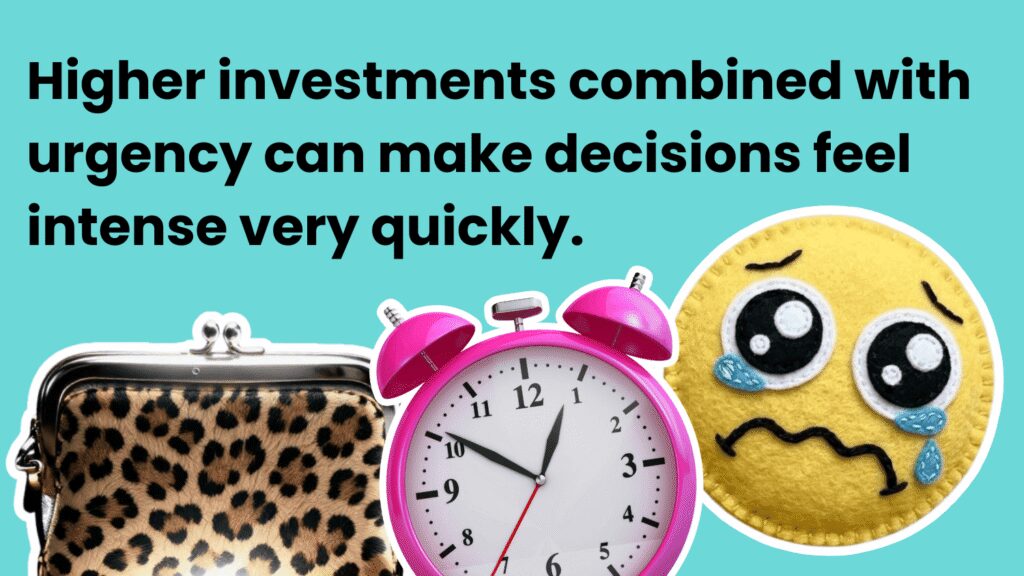
Higher investments combined with urgency can make decisions feel intense very quickly.
At the same time, smaller purchases can slip by almost unnoticed.
Sometimes the pattern isn’t one large purchase, but many smaller ones that accumulate over time.
I personally have purchased $2000 courses I regretted, but probably if you add up my little low ticket things I’ve bought over the years, they could add up to just as much.
Have you interacted with this person before?
Sometimes a purchase feels safer because you’ve already been around someone’s content.
Maybe you’ve read their emails or listened to their podcast. Maybe you bought a small workshop or download before.
That’s where the know, like, trust factor comes into play.
With Ads coming at you from all directions these days, it’s easy to stumble upon something and quickly feel like you need it immediately to change everything.
Think about joining their list or follow along to learn more before you push that buy button. 😬
Does the course promise to “finally fix” something?
Many offers frame themselves as the missing solution.
The system that finally brings consistent clients.
The method that makes marketing easy.
The strategy that removes all the guesswork.
Sometimes tools and courses do actually unlock important insights.
But most businesses grow through many small improvements over time, and not one single purchase is going to change everything for you.
I know that sounds super dumb, but sometimes the sales pages make it sound so easy you can lose sight of the actual work you’ll have to do to implement those “super easy video hooks.” 🪝🐡
Something being framed as the long-awaited solution or the think that will “fix” everything quickly is a definitely red flag worth noticing.
Does it sound extremely easy or fast?
Speak of things working quickly, sales pages emphasizing speed and simplicity are ones to look out for.
You’ll see phrases like:
- launch in 7 days
- get clients immediately
- the simple system anyone can follow
Ease is appealing, and sometimes systems really do simplify things.
But it’s worth noticing when the effort, context, or variability of results isn’t really discussed. And usually the results come from the work that happens after the purchase. (Like making the dang videos. 😕)
What role are testimonials playing?
Testimonials can be helpful because they show someone had a positive experience.
But they usually emphasize rare outcomes with very little context.
You might see someone who made a lot of money quickly or whose business grew dramatically.
But the things they usually leave out are:
- where that person started
- how much time they invested
- what other resources they had
- how many people had a different outcome
They are real experiences. They just aren’t the whole picture.
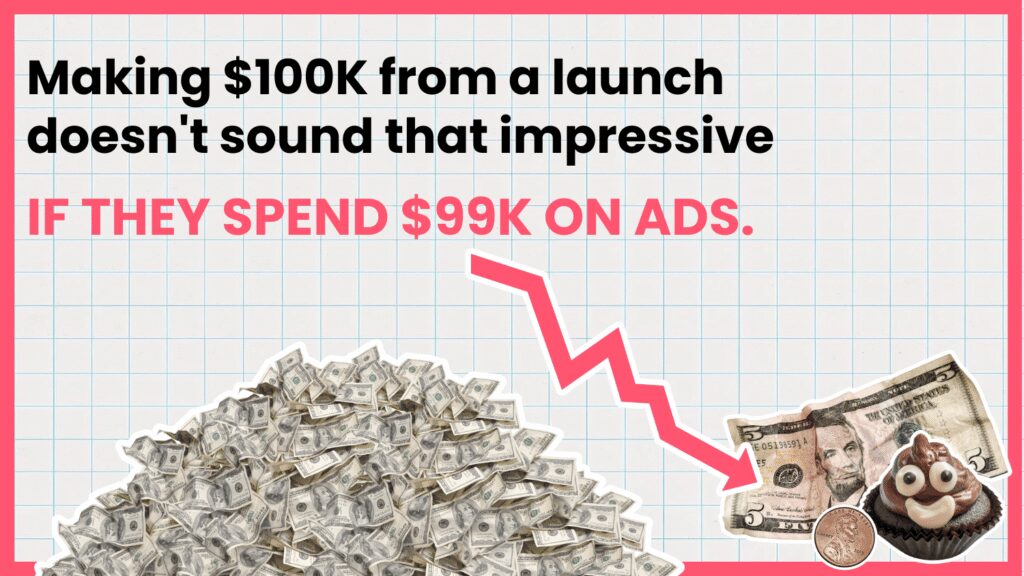
Making $100K from a launch doesn’t sound that impressive if they spend $99k on Ads. 😳
Real Stories from Business Owners
Back when I was really bitter about getting burned in the online business world I hosted a Zoom call where a group of business owners talked honestly about courses, memberships, and programs they regretted buying.
People had the option to change their name and keep their cameras off so they could speak openly.
Some people had spent a few hundred dollars. Some had spent thousands.
But the biggest theme that kept coming up wasn’t the money.
It was the feeling of thinking you were the only one.
Over and over again people said some version of:
“I thought I should have known better.”
“I thought I was the only one who fell for that.”
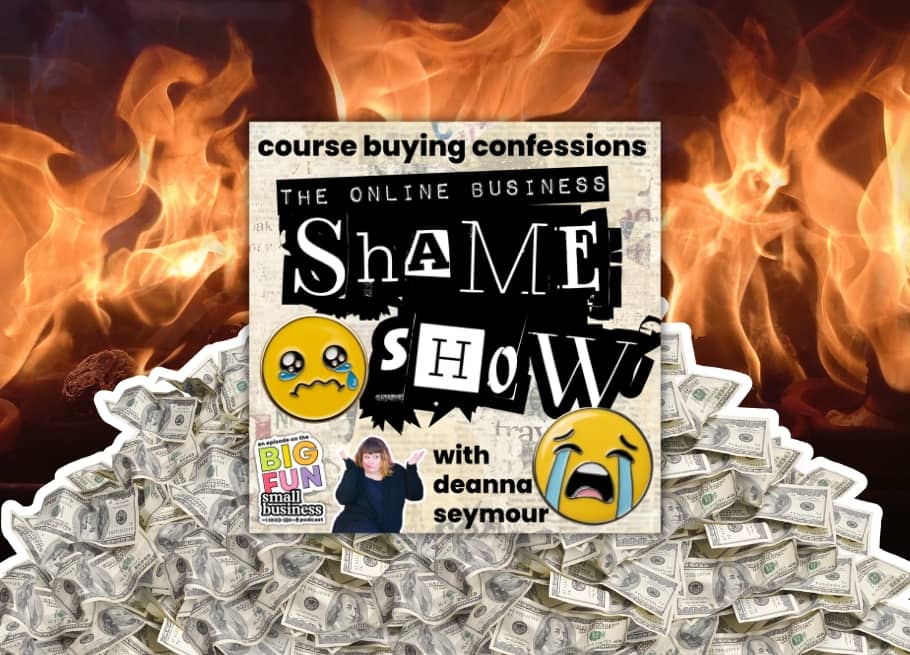
I turned that conversation into a podcast episode called The Online Business Shame Show.
You can listen here:
A Simple Way to Slow Down Before Buying
Since I’ve been fighting against this I got duped by a “mom who bought a $300 camera of craigslist” and her bestie with a little fluffy dog (IYKYK) back in 2019 I created something that acts as a pause button before buying.
It’s called the Before You Buy Buddy.
Instead of telling you what to do, it walks through questions like the ones above and helps you notice what’s happening around the purchase.
The goal isn’t to stop you from buying things, because not all purchases are bad.
It’s simply to slow the moment down so the decision comes from awareness rather than urgency.
The Quick Scoop: Buying Online Courses
How do I know if an online course is worth it?
Many people wonder if online courses are actually worth it before buying. The truth is, it depends on the context around the results being shared.
Always look around for context around the results being shared. Testimonials usually highlight outcomes but rarely show the full picture, like the person’s starting point, time invested, societal privilege, or other resources they used. Slowing down and asking a few questions before buying can help calm your nervous system, regulate your emotions, and then you can clearly decide if you really want or need the course. Like I said, the Before you Buddy 🤖 can help you with that.
Why do people regret buying online courses?
Lots of purchases happen before you realize it because marketing emphasizes urgency, big outcomes, or simplicity. Later, you realize the course required more time, effort, or context than you expected, or that you could find a better solution for free online, or the biggest bummer – when you already owned a similar resources you hadn’t used yet. (I’ve been there done that, no shame!)
Should I buy another course for my business?
I used to be a teacher and consider myself a lifelong learner. I firmly believe that courses can be helpful, but they work best when purchased intentionally rather than impulsively. Before buying, it helps to ask whether you actually need the information right now, whether you’ve used similar resources you already own, and whether the offer still feels appealing once the urgency is removed.
What questions should I ask before buying a course?
Helpful questions include:
- Is urgency influencing my decision?
- Do I already have something similar I haven’t used?
- Am I excited about doing the work involved?
- Would I still want this next week?
One Last Thought
If you’ve ever bought something for your business and later thought, “Hmm… that wasn’t what I expected,” you’re definitely not alone. 🙁
A lot of really smart business owners I know have had that exact same experience.
Sometimes we don’t need more information, we need help implementing what we already know.
Creating a little space between seeing the offer and clicking the button can change everything.





One experimental feed with lots of different shows


close


Thank you for subscribing!